

The Ultimate Guide to Organizing Your Toddler’s Room (Without Stress)
Transforming a playroom tornado into a peaceful, functional space shouldn’t feel overwhelming. Whether your toddler’s room is overflowing with toys, books, or clothes—or all three—organizing it can feel like climbing Everest. But trust me, with a few strategic moves and some heartfelt tricks (and yes, even involving your toddler), you can turn chaos into calm without losing your patience—or your weekend.
If you’re looking for more ways to help your child bloom, check out these amazing first-week of school tips for parents—they complement your newly peaceful room by helping the school transition go smoother too.

1. Why Simplicity and Kid-Friendly Systems Matter
Toddlers thrive in spaces where everything has a place. When their belongings are accessible—and the room isn’t an obstacle course—they develop independence and decision-making skills, and yes, you get fewer “I can’t find my ___” breakdowns.

2. Start with a Room Edit — Keep, Toss, Donate
Grab three bins or bags and let your toddler help categorize their things:
- Keep: Favorite toys, daily essentials
- Donate/Store: Gently used items they’ve outgrown
- Toss: Broken or stained toys
Even small hands understand the joy of letting go when it’s a shared process.

3. Zone It Out — Separate Rest, Play & Read Corners
Mapping the room into distinct zones helps toddlers mentally organize:
- Sleep Zone: Crib or bed with wall art void of distractions
- Play Zone: Easy-access toy storage; soft, safe flooring
- Book Zone: Low shelves, comfy cushion or chair
- Dress Zone: Open wardrobe or labeled bins at toddler height
This creates flow and keeps clutter corralled—much more manageable than scattered chaos.

4. Smart, Accessible Storage That Grows with Them
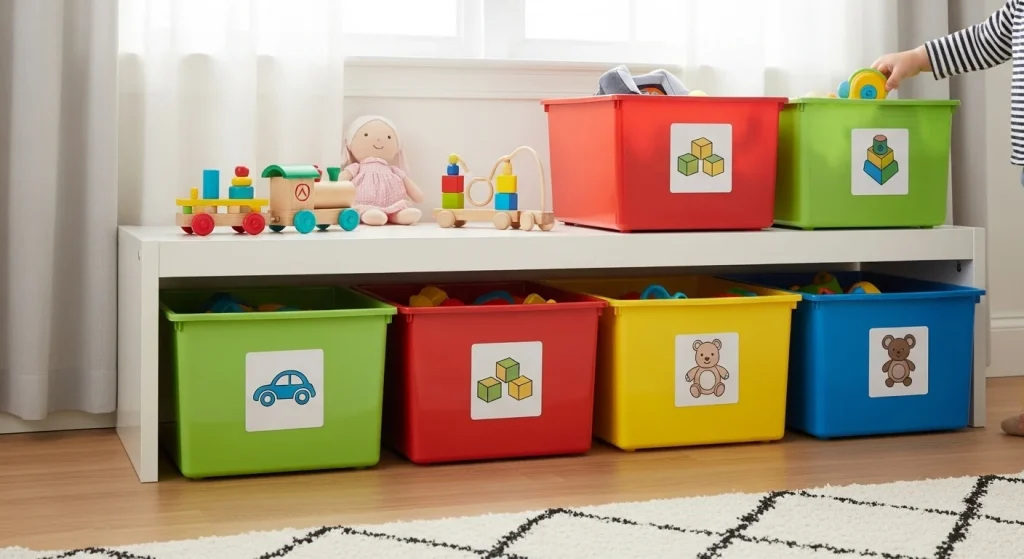
- Open bins: Label them with picture icons so toddlers can put toys away themselves.
- Rotating stash: Keep only a few toys on display, swap the rest weekly for novelty without new purchases.
- Low shelves: Kids can choose books or toys, and you won’t need a step stool.
This lets them practice autonomy (and early organization skills) effortlessly.
5. Small Furniture = Big Freedom
Ditch oversized storage. Opt for lean shelves, compact bins, and split levels—so toddlers don’t tip everything out trying to reach. Anchor furniture to the wall for safety, and you’ve created a stable, accessible space.

6. Personalize With Their Input
Ask your toddler to choose the color of their bins or pick one piece of wall art they love. When they feel a space is theirs, they’ll respect it more and feel empowered. Include them in simple labeling or decorating to nurture ownership.

7. Use Visual Labels and Pictorial Guides
Young toddlers don’t read yet, so use pictures on labels. For example, a card with a teddy bear illustrates that stuffed animals go in that bin. It builds reading readiness and reinforces order.

8. Embrace Daily Quick Straighten-Ups
Before bedtime, spend just 5 minutes doing a room sweep together. Play “toy cleanup race” or “sock monster chase.” These quick routines prevent bigger messes and teach responsibility in a playful way.

9. Use Vertical Space with Hooks and Hanging Bags
Maximize space by mounting hooks or wall pouches at toddler height for backpacks and hats. Clear floor space gives more room for play, and hanging storage keeps essentials in reach without crowding.

10. Daily Routines That Reinforce Organization
Incorporate simple steps like “pick one toy to sleep beside” or “put your book back on the shelf before storytime.” Over time, these become habits that keep the room tidy and structured.

11. Seasonal Storage for Rotating Items
As your curious toddler grows, rotate older or outgrown items into bins labeled “storage”. Label the others “keep frequent toys”. Stash the storage bins in a closet or under the bed. This keeps only relevant toys at the ready and reduces overwhelm.

12. Queen-Thematic Decor That’s Calming (and Functional)
Keep designs simple: muted walls, a soft rug, one art wall. Use functional, beautiful pieces like a fairy canopy over the reading nook or a calming lamp dimmer for winding down. The aesthetic doesn’t need to be Pinterest-perfect—just soothing and toddler-safe.

Bringing It All Together
Organizing your toddler’s room without stress isn’t about buying bins—it’s about intentional design, clear zones, and kid-friendly systems. Involve your toddler in small ways, keep routines short and joyful, and embrace storage that keeps clutter hidden but accessible. Over time, the real magic is in the calm that follows.


